
I am making a film!
It is only a short film. Probably ten or twelve minutes long. There are thousands of them that are made every day all over this planet. Why then, does it feel so surreal to say it out loud?
Maybe it is because of this long-standing relationship I’ve had with filmmaking throughout my life. I’ve been writing stories from the age of ten, at least that’s the earliest writing I remember. A story of a kid who goes to the zoo with his dad. That’s all of it. I dragged the story for about five pages. There’s a mythic status a story attains after the fourth page mark. Now it’s entering into adult territory. At least that was my thinking.
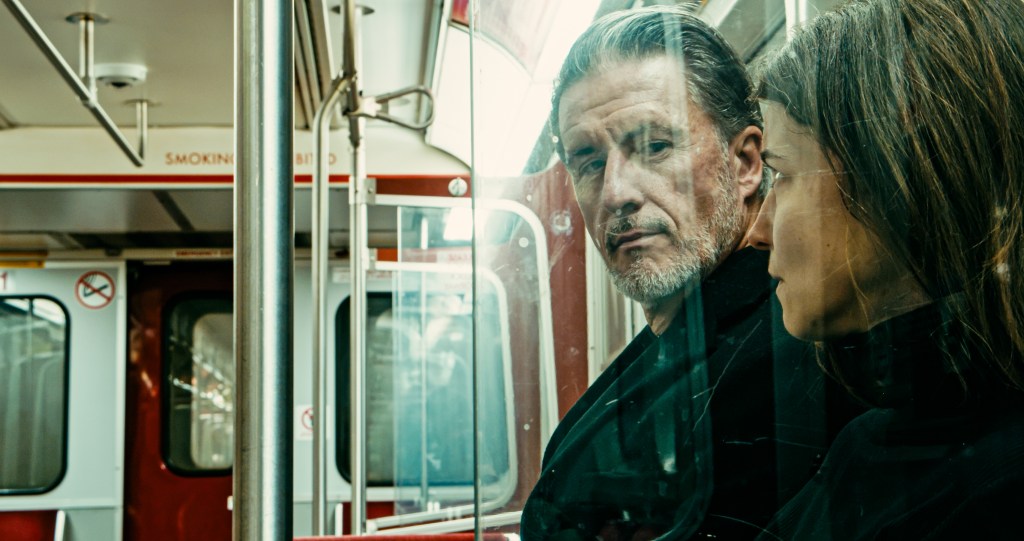
A still from my upcoming film
I was a voracious reader. I read anything and everything I could get my hands on. Siruvar Malar, Kumudham, Vikadan, Rajesh Kumar novels, Indira Soundararajan novels, Sujatha’s books, The Little Mermaid, Goosebumps series, Readers Digest and anything and everything in between. I was impartial. I started writing short novels, short stories, and later essays and poems.
There was this liminal space after the completion of twelfth grade and the first year of college. I was quickly packed and sent to my cousin’s house in Madras to learn English, to learn city life, to learn independence. It was a small one-bedroom house that sat on the first floor of a typical run-down Mambalam home. The balcony overlooked Mambalam train station and Ranganathan street. It was an understatement to note that I was intimidated. I was petrified. The big city gave me this sense of nausea.

Mambalam train station
My cousin worked for some big electronics company. The bus would suck him in early in the morning, and spit him back out at around 6 pm, on the street corner. Until then, I ruled the tiny little house. I’ve never seen a DVD player until then. My cousin had quite a bit of DVD collection, courtesy of nearby Sathya Bazaar. Old Tamil, Hindi and Telugu films, American films like Terminal, Forrest Gump, Shawshank Redemption, Spider Man, and all with subtitles!
Other than some random Anaconda, Jurassic Park, and a bunch of Jackie Chan and Bruce Lee movies, all dubbed in Tamil, I’ve never watched any other foreign films, especially films with subtitles. On one of those lazy, sun filled afternoons, I was rummaging through my cousin’s DVD collections. Something made me stop when I saw a picture of this ravaged man, alone on an island, sitting near the fire. It was a DVD of this little film called Cast Away.
That afternoon, I spent my time with Chuck Noland (Tom Hanks) on a desolate tropical island. I wept when Wilson, the volleyball, was lost at sea. I cried tears of joy when Chuck was rescued by a passing cargo ship. For the very first time, I understood the tragedy of both sides when Chuck met his wife one last time.
I sat there in silence when Chuck followed the girl, following his fate at the fork road. My first thought was, “You can’t do that! You can’t make a film about a man on an island!” I had never seen anything like it.

Cast Away
I spent the following days watching The Terminal, Saving Private Ryan, Forrest Gump, Catch Me If You Can. The only other non-Tom Hanks film I watched was Roberto Benigni’s Life is Beautiful. That film added another dimension as it is an Italian film; the first non-English foreign film I’ve ever seen. It was almost like someone forced open my brain and poured in never-before thought of ideas and imagery. What wonderful films! What wonderful worlds! Not only did I become a Tom Hanks fanatic, but I was also gladly lost in the wonderful world of cinema.
I protested, fought, screamed, cried, fidgeted, kicked and pleaded for my family to let me join a film school. Nothing worked. My aunt partly helped to pay for my college fee, on the condition that I would join an engineering course. Mechanical Engineering was the cheapest course I could find. So I became part of the horde; an engineering college student in Chennai.
During Engineering Graphics, and Thermodynamics hours, I was bent down, face towards my notebook, where I continued writing short stories. I was even able to escape the dreaded ‘ragging’ (bullying) by the fourth year students by telling them stories. Stories of time-travelling heroes, tragic detectives solving serial murders, future worlds with flying cars, and post-apocalyptic desertscapes. I was quickly becoming ‘Kadha’, the storyteller.
My evenings were spent torrenting films from around the world. Watching murder mysteries, sci-fis, dramas and thrillers every single night. There was a time where I watched 2-3 films a day.
When I was in my third year in college, I had this strong desire to quit my studies, and stand outside of AVM studios to become an assistant director. I promptly did exactly that. Not the quitting part, but the standing outside of AVM studios part. I used to stand in front of AVM studios, near a tea stall, eavesdropping on conversations, and sparking conversations with associate directors. Funny enough, a number of people warned me. They said filmmaking should best remain a dream. “Don’t quit your studies, don’t become an assistant director!” But of course, something led me to become a third assistant director, in other words, second assistant director of an assistant director.
I was part of many a story discussion in dimly lit smelly bachelor rooms. I borrowed my friends’ DSLR camera, and started making my first film. Fresh off the influence of Neil Blomkamp’s District 9, I set out to make an alien invasion mockumentary called Fever Abduction.

The only survivng poster from the Fever Abduction days.
I travelled 9 hours to Hosur to cast my cousin as a psychologist in the film. Why does an alien invasion mockumentary need a psychologist in Chennai to explain the plot? I don’t know. I cast my friend as a farmer who suffered through a horrible crop circle from the mysterious visitors. What else?
I made another short film with my friends about the search for a Veerapan type figure. I led a bunch of my friends to a mountain near Guduvanchery.

Shooting short films with my friends – Back in the day
I went on to make another short film called Sync, about a person who dreams about a bunch of deaths elsewhere in the city. They were bad. Badly directed, badly acted insanities. But we had a blast making them, and inevitably screening them in my living room, with all my friends and family gathered to witness and make fun of my films. I loved the whole thing.
Soon, my family figured that I was a second assistant to another assistant director. (Fun fact: This assistant director is now a first-time director, whose debut film came out this year starring Kavin. I was surprised to hear his name after a decade.)
I still remember crying to my mom that I want to quit engineering, and pursue filmmaking. She made me promise to at least finish my engineering course as a backup. I reluctantly agreed. I stopped making my short films, but the movie watching and story writing never stopped.
After my Bachelors degree, life happened! I moved to Canada to pursue my Masters in Project Management. I secured a bank loan for this move. Why didn’t I go after filmmaking? Why Project Management? I don’t think there’s an easy answer for these questions. A South Indian middle class family would be a close enough answer, I guess.
Student life in Canada was nothing short of a horrific trainwreck. I realized what it means to go abroad without any financial support from your family. My family didn’t have any more money to spare. With crushing bank debt, and toxic roommates, it was no surprise I was homeless for four days. My initial years in Canada were defined by homelessness, hunger, depression, suicidal thoughts, and toxic relationships.
I still remember sitting outside my university on a misty spring night with a friend. We were talking about films, and he began advising me to drop the idea to become a filmmaker. He said, “filmmaking as a hobby is fine, but it won’t work in real life. Get a job, get married, have kids, watch films on the weekend. I think that’s OK.” I had this intense anger listening to his advice. But I didn’t say anything back.
I soon secured a job as a Data Analyst, but I was dissatisfied. I could not stand working on an excel sheet. A voice in my head was nagging that this was not what I am meant to do. I was eventually fired from that job. One depressed afternoon, I went to the Toronto Public Library. The public library was my refuge. I sat there for hours on end, reading, sleeping, along with the fellow homeless of the city.
They had their new digital studio open around that time. I booked my free two hours, and began working on a mac studio. I opened Final Cut Pro X and began editing a mock file. I was in the zone. The same zone I go to when I write my stories. It’s a place in your mind, where the external world slowly disappears, where you and the object of your passion are the only things to exist in the universe. It is so effortless, offers no resistance, it’s a flow state, it’s meant to be. I muttered, ‘this is what I am meant to do’.
Over the next few months I taught myself shooting, editing, and dusted off my old DSLR camera. I posted ads in local classifieds offering my services for shooting birthdays, bar mitzvahs, bridal showers, real estate photos and videos. There was a time where the battery ran out at the exact moment the birthday girl blew her candles. Another client was so dissatisfied with my work, and yelled at me to give the money back. I tearfully returned his money. Frequently I thought to myself that I was no good, I don’t have the chops for this field, but I wouldn’t give up. I would always return back to filming and editing.
After years of depression, anxiety and panic attacks, I was beginning to go through this weird phase, where I was angry, not your garden variety anger, but a certain anger of volcanic proportions, at the universe, at existence, at life itself. I was confused, lost, and beaten. The films I gravitated toward had also changed. I made my way to the films of existential auteurs like Tarkovsky, Bergman, Kurosawa, Abbas Kiarostami, and I began to understand that cinema could be a record of one’s own seeking; not an answer to one’s search, but a record of your search.

This brutal quote by Andrei Tarkovsky, in his book, Sculpting in Time, affected me more than any other theory or quote about cinema and art.
“The aim of art is to prepare a person for death.”
And when I read this line, I realized, my anger has always been about death itself, even when it was about life, it had always been about death.
It was around that time I started a YouTube channel and began making philosophy videos, partly to vent out my anger, and partly to keep editing, and to keep filming. That YouTube channel eventually got my job in China; a Video Producer in a manufacturing company in a remote corner of China. Life turned better, not initially, but a good couple of years later. Financial stability, lots of friends, along with it, an adult tiredness. I kept writing stories whenever I could, but I didn’t make that film, not for lack of trying though.
I began making a short film called The Station in China. I started shooting it with my friend Brian. I was proud of what I shot, but it quickly fell through due to work and life commitments. I realized that your friends making a film with you when you were in college is not the same as your friends helping you make a film when you are working and when they are pushing fifties. A beer on a summer night would always win against a night of filming.


Stills from The Station
Once again, I relocated to Canada which is where I am now, looking at the grey March skies, and writing this aimless essay.
I now work as a Producer for CBC, the national TV and radio broadcaster in Canada. I am incredibly thankful to open Premiere every single day and not an excel sheet. I love my work, I love the people I work with. When I look back at my life, I am amazed at the journey. I’ve lived in so many remote parts of the world, I am friends with so many people from around the world, I taught myself video production against all odds, and I am now doing what I love for a living. But …
This question keeps me awake at night. I am in the second half of my thirties. So if not now, then when? When am I going to make that film?
I am still battling with my anxiety, and my depression, and a fear of reaching out and interacting with strangers. What is filmmaking if not collaborating and interacting with strangers?
Three months ago, I had finished a script for a ten minute film called Epilogue. I printed the script out and was reading it. My friend who was working next to me said, “you have to start at some point. Now that you’re in Toronto, there are so many people who’d be ready to work on your film. Actors who are looking to make their reels, technicians who’re looking to create demos. What’s stopping you? Where’s the block?”
That evening I made an ad announcing my film in some film community, and put out casting calls on Facebook groups and a film job site called Mandy. It was nerve-wracking. What if no one responds to the ad? What if people respond to the ad? What would I say to them? The script is very bizarre. What if they judge me? What if I am a bad writer? How would I give them directions? How will I shoot the film? What if I am a bad cinematographer?
Next morning I woke up to about thirty or so profiles showing interest in acting in my film. The next couple of months were a blur. Once I finalized the central characters, I met them, we did a table read, and I started filming with them. Somehow the block, the knot, was beginning to resolve. I started filming my script, not a YouTube video, not a band performance, not a real estate video, but a scene-by-scene visual recreation of my bizarre script Epilogue.
Earlier in life, I was excited at the prospect of making films. But now I’ve settled for a quiet numbness that’s eating a micro part of me every day. Citalopram probably contributes to that a little bit. Now I am no longer excited. But it is something I have to do. I know that. It is my way. I feel right making this film.
The name of my protagonist is Vesper. She is played by this brilliant actor called Monica. And two other central characters are played by John and Ashley, upcoming actors in the Toronto film scene. It’s a pleasure to see them interact and bring my story to screen, bit by bit, piece by piece. I was a nervous wreck when I filmed my first dialogue scene. I had to oversee the sound, camera, location, and everything in between; truly a one-man band.
We have to film strictly during the weekends. Monica is trying to be an actor again after giving up a thriving acting career decades ago for her home life and her children. I work 8:30-5:30, and occasionally freelance during the week. The same goes for other cast members. We come together during weekends, and slowly bring the film alive one scene at a time.
Filming in public and metro stations without permission was nerve-wracking. So many questions and uncertainties. People walking in and out of shots, and confrontations with security guards. Yet at the end of the day, when I replay what we shot for the day, I can’t help but feel proud. Despite the numbness, somewhere deep within me I am excited.
About 90% of the film is now completed; one more shoot left. My boss at CBC, after finding out that I am making this film, offered to host a screening in our 8th floor movie theater. I am finally untying this knot. I am unblocking the flow. I am already looking forward to making my next film.
Filmmaking is glorious.


Some more stills from Epilogue
 Autoboy Chronicles